
Electrical Stimulation (E-Stim)
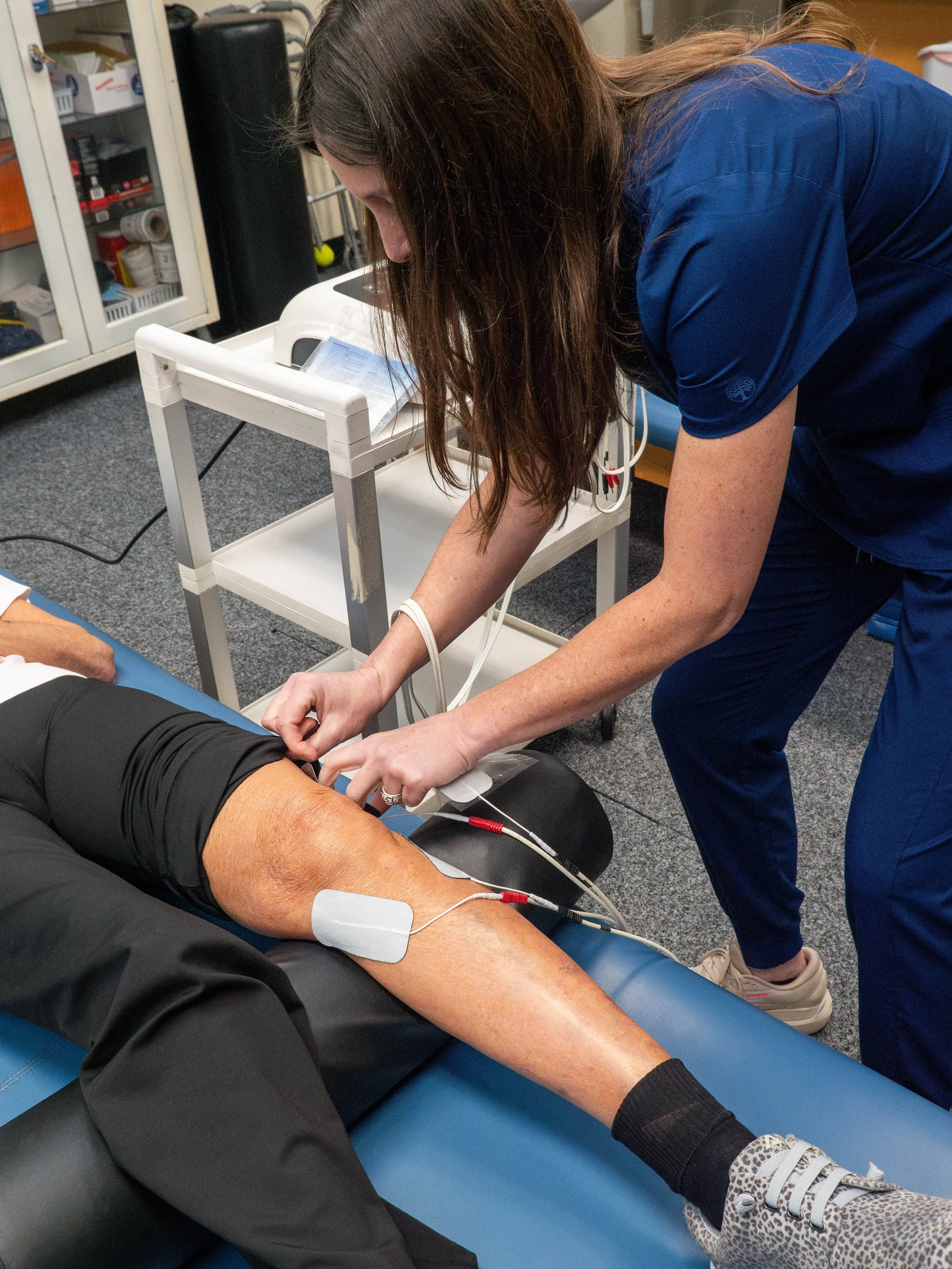
Electrical stimulation (often called “e-stim”) is a therapy tool using gentle electrical impulses through small adhesive pads placed on the skin. Depending on the settings, e-stim may be used to reduce pain or to help activate and retrain muscles not firing well after injury, surgery, or time off activity.
At Eastern Shore Physical Therapy, e-stim is never a stand-alone solution. It’s one tool we may use alongside manual therapy, mobility work, and therapeutic exercise to help you progress more comfortably and build long-term results.
What Electrical Stimulation Is
In PT, e-stim commonly includes two categories:
TENS (Transcutaneous Electrical Nerve Stimulation)
Used primarily for pain relief by changing how your body processes pain signals.
NMES (Neuromuscular Electrical Stimulation)
Used to help activate muscles and improve contraction/strength—especially when a muscle is “inhibited” after injury or surgery. Research shows NMES added to standard PT can improve early quadriceps strength and function after ACL surgery compared to PT alone.
(Your therapist will choose the type and settings based on your evaluation and goals.)
Why We Use It at Eastern Shore PT
E-stim can support recovery by improving comfort or improving muscle activation, and then we reinforce progress with movement and strengthening.
Pain Modulation
E-stim can help reduce pain so you can move more comfortably and participate in rehab.
Improve Movement Quality
When a key muscle starts engaging better, it can be easier to retrain walking, stairs, squatting, and other functional movements.
Muscle Activation & “Wake-Up” (NMES)
NMES can help a muscle contract more effectively when it’s not firing well after injury or surgery.
Works Best as Part of a Plan
We use e-stim to support what matters most—moving better and building strength—not as a “quick fix.”
Support Early Rehab After Certain Procedures
Evidence suggests NMES can be particularly helpful in the early post-operative phase to improve strength and function (often studied in the quadriceps after ACL surgery).
What to Expect
If e-stim is a good fit for you, your therapist will:
Place small adhesive pads on the skin near the area being treated
Adjust the intensity to a comfortable level
Use it for a short session (often 10–20 minutes depending on your needs)
Pair it with movement, exercise, or education to reinforce progress
What it feels like: a tingling or pulsing sensation. With NMES, you may feel a stronger contraction as the muscle activates.
Who May Benefit
Electrical stimulation may be helpful for patients who are experiencing:
Pain limiting movement or exercise participation
Difficulty activating a muscle after injury or surgery
Weakness after time off activity or immobilization
Rehab goals requiring improved muscle control and performance (stairs, walking, return to sport)
Not every patient needs e-stim. We’ll recommend it only if it supports your evaluation findings and goals.
Safety & Comfort
E-stim is commonly used in rehabilitation, but it isn’t appropriate for everyone. We’ll review your health history and make sure it’s safe for you. If anything feels uncomfortable during treatment, we adjust settings right away.
Long-Term Recovery
E-stim can help you take a step forward—by reducing pain or improving muscle activation—but long-term results come from what we build next:
Restoring mobility
Rebuilding strength and stability
Training functional movement for real life
Following a home plan that’s realistic and sustainable
Ready to get started?
Request an appointment today at one of our convenient locations in Daphne or Bay Minette.
DAPHNE CLINIC
6475 Van Buren St.
Daphne, AL 36526
Phone: 251-626-9052
Fax: 251-626-5384
Email: daphne@easternshore-pt.com
Monday: 8am – 5pm
Tuesday: By Appointment Only
Wednesday – Friday: 8am – 5pm
Saturday, Sunday: Closed
BAY MINETTE CLINIC
618 McMeans Ave.
Bay Minette, AL 36507
Phone: 251-937-4700
Fax: 251-937-4708
Email: bayminette@easternshore-pt.com
Monday – Thursday: 8am – 5pm
Friday: By Appointment Only
Saturday, Sunday: Closed