
Neuromuscular Reeducation
Sometimes pain isn’t the only problem—movement patterns change, muscles “shut off,” balance feels off, or your body starts compensating without you realizing it. Neuromuscular reeducation is a physical therapy approach that helps retrain the connection between your brain and your muscles, so you can move with better control, coordination, and confidence.
In physical therapy, neuromuscular reeducation commonly targets movement, balance, coordination, posture, and proprioception (body awareness)—helping your body relearn efficient movement patterns after injury, surgery, pain, or time off activity.
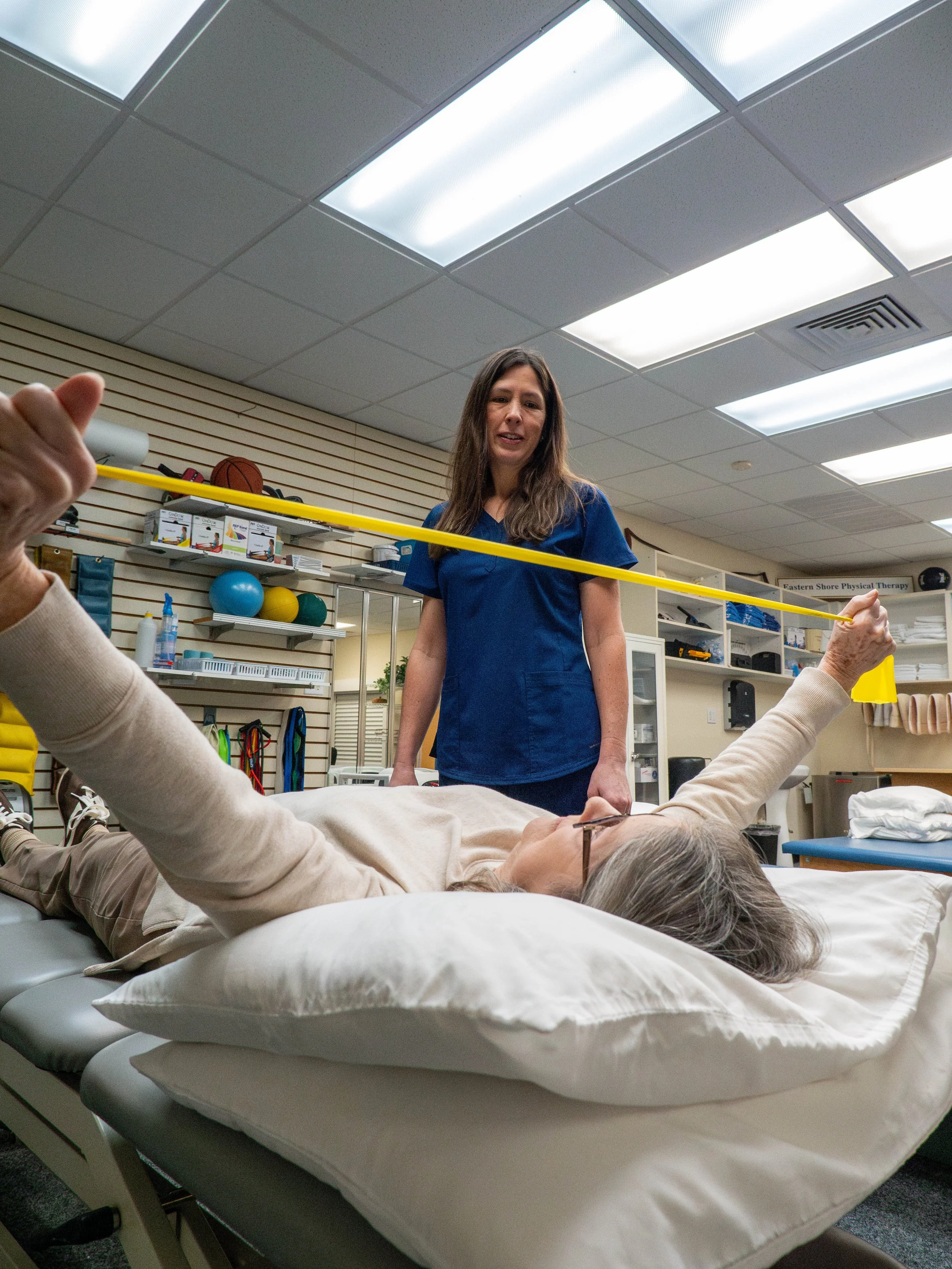
What Neuromuscular Reeducation Is
Neuromuscular reeducation uses specific exercises and guided movement activities to improve how your nervous system and muscles work together. The focus is often on:
Posture and alignment
Balance and stability
Coordination and timing
Controlled movement patterns
Body awareness (proprioception)
Why We Use It at Eastern Shore PT
Better movement isn’t just about strength—it’s about control, timing, and confidence.
Improve Body Awareness (Proprioception)
Helps you “find” the right positions and movement patterns—especially after injury or surgery.
Pair With Strength for Long-Term Results
We combine neuromuscular training with strengthening and mobility so improvements stick beyond the clinic.
Support Return to Activity
Great for athletes and active adults who need control for cutting, landing, single-leg stability, and quick direction changes.
Retrain Efficient Movement Patterns
We address compensation habits (like limping, guarding, or overusing one side) and restore better mechanics.
Restore Balance & Stability
Training improves steadiness with standing, walking, turning, and stairs—so daily movement feels safer.
What to Expect
Your first visit may include:
A movement screen (how you squat, step, balance, or walk)
Assessment of posture/ alignment, balance, and stability
Testing of control and coordination (especially at the ankle/ knee/ hip/ shoulder)
A clear plan of what we’re training and why
Ongoing sessions may include:
Balance drills (static and dynamic)
Single-leg stability and control work (as appropriate)
Step training, stair work, and gait pattern retraining
Posture and movement cueing during functional tasks
Reaction and coordination drills for sport/ work demands
Who May Benefit
Neuromuscular reeducation may be helpful if you:
Feel unsteady or less confident with movement
Notice compensation patterns (limping, guarding, or shifting weight away)
Have recurring ankle sprains or joint instability
Are returning after surgery or injury and need stability/ control
Want to move more efficiently for sport, work, or daily life
Feel like strength is improving, but movement still feels “off”
Long-Term Recovery
We focus on training movement patterns you can rely on, so you’re not always thinking about how to move. Neuromuscular reeducation supports:
Consistent, confident movement
Better joint control and stability
Reduced flare-ups from compensation
A plan you can continue at home and in the gym
Ready to get started?
Request an appointment today at one of our convenient locations in Daphne or Bay Minette.
DAPHNE CLINIC
6475 Van Buren St.
Daphne, AL 36526
Phone: 251-626-9052
Fax: 251-626-5384
Email: daphne@easternshore-pt.com
Monday: 8am – 5pm
Tuesday: By Appointment Only
Wednesday – Friday: 8am – 5pm
Saturday, Sunday: Closed
BAY MINETTE CLINIC
618 McMeans Ave.
Bay Minette, AL 36507
Phone: 251-937-4700
Fax: 251-937-4708
Email: bayminette@easternshore-pt.com
Monday – Thursday: 8am – 5pm
Friday: By Appointment Only
Saturday, Sunday: Closed
These are wonderful, loving, caring people to be around. It’s never a dull moment with them…
—Alberta Williams
WHAT OUR PATIENTS SAY