
Ultrasound Therapy
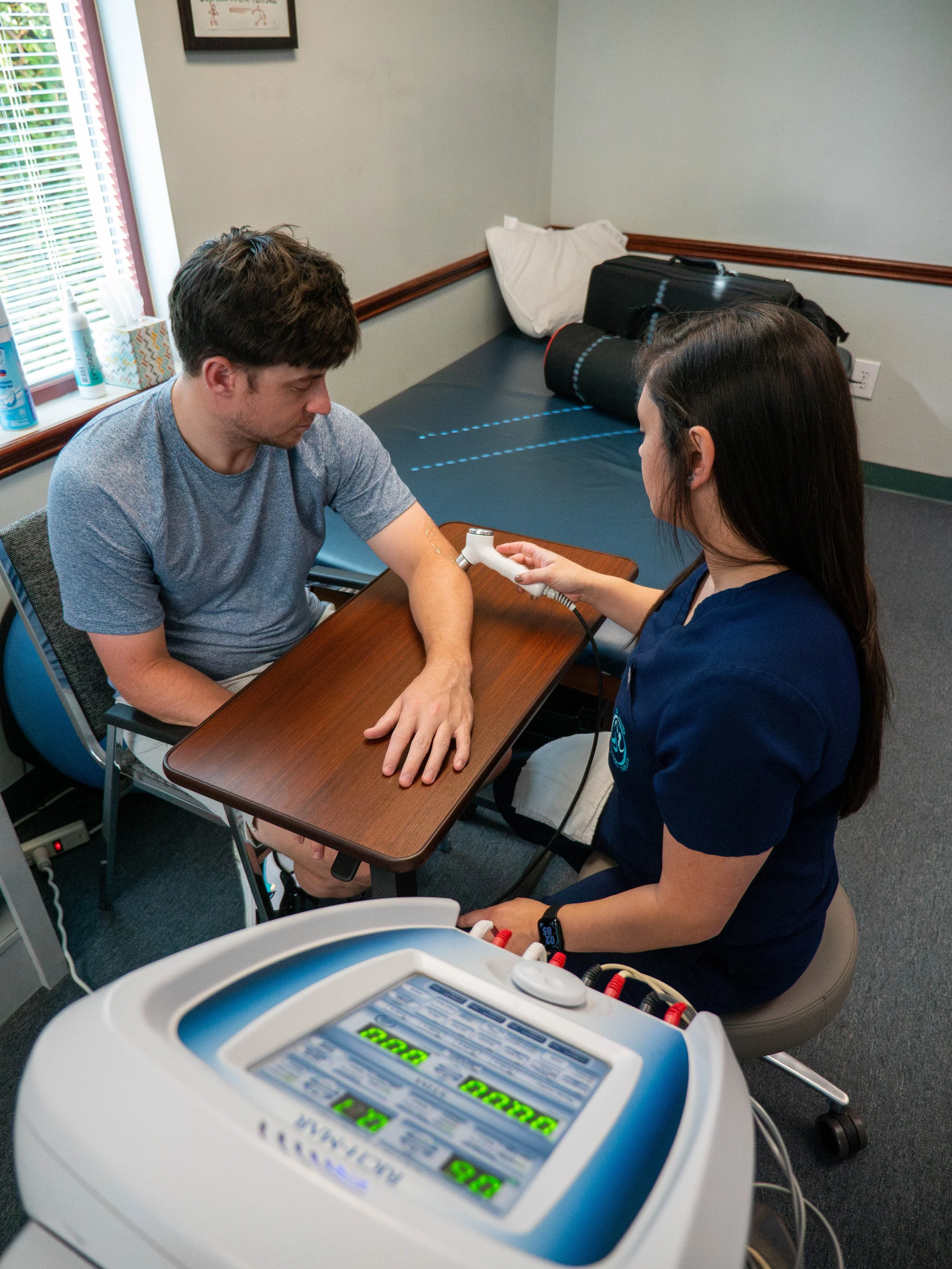
When pain, stiffness, or soft-tissue irritation is limiting your movement, ultrasound therapy may be a helpful part of your plan. Therapeutic ultrasound uses high-frequency sound waves delivered through a small handheld applicator to target specific areas of the body. It’s commonly used in rehabilitation to support comfort and help prepare tissue for movement and exercise.
At Eastern Shore Physical Therapy, ultrasound is not a stand-alone solution. When we use it, it’s to support what matters most—helping you move better and progress through active treatment like mobility work and therapeutic exercise.
What Therapeutic Ultrasound Is
Therapeutic ultrasound is a modality that delivers sound waves into tissue, creating gentle vibration in the targeted area. It is typically applied with gel on the skin and may be delivered as a mild warming treatment depending on the settings used.
Why We Use It at Eastern Shore PT
Ultrasound can be a supportive tool—especially when paired with hands-on care and active rehab.
Part of a Bigger Plan
Our goal is long-term recovery—ultrasound can support comfort, but lasting change comes from strength, mobility, and movement retraining.
Adjunct for Specific Conditions (When Appropriate)
Evidence varies by condition. For example, reviews have found limited evidence for ultrasound in chronic low back pain, which is why we use it selectively and pair it with active care.
Support Comfort in Irritated Tissue
Ultrasound may be used to help manage symptoms so movement and exercise feel more tolerable.
May Be Considered for Arthritic Joint Pain in Some Cases
Cochrane notes therapeutic ultrasound is one modality studied for osteoarthritis symptoms, though outcomes and effect sizes can vary.
Help Prepare Tissue for Movement
When tissues feel tight or guarded, ultrasound may be used before mobility work or stretching.
What to Expect
During an ultrasound session, your therapist will:
Apply gel to the skin over the area being treated
Move a small applicator over the area for a short period
Monitor comfort and adjust as needed
What it feels like: many people feel little to nothing; sometimes a gentle warmth depending on settings. If you feel discomfort, we adjust immediately.
Who May Benefit
Ultrasound therapy may be considered when you’re experiencing:
Soft tissue irritation that limits movement
Localized pain or stiffness that makes exercise difficult early on
Joint irritation (including arthritic flare-ups) where symptom support helps you stay active
Not every patient needs ultrasound. We’ll recommend it only if it supports your evaluation findings and goals.
Not every patient needs ultrasound. We’ll recommend it only if it supports your evaluation findings and goals.
Safety & Comfort
Ultrasound is generally considered a low-risk modality when applied appropriately by trained clinicians. We’ll review your history and choose settings based on the area being treated, your comfort, and your overall plan.
Long-Term Recovery
Ultrasound may help support comfort, but long-term improvement comes from what we build next:
Restoring mobility and range of motion
Rebuilding strength and stability
Training functional movement for real life
Following a realistic home plan you can maintain
Ready to get started?
Request an appointment today at one of our convenient locations in Daphne or Bay Minette.
DAPHNE CLINIC
6475 Van Buren St.
Daphne, AL 36526
Phone: 251-626-9052
Fax: 251-626-5384
Email: daphne@easternshore-pt.com
Monday: 8am – 5pm
Tuesday: By Appointment Only
Wednesday – Friday: 8am – 5pm
Saturday, Sunday: Closed
BAY MINETTE CLINIC
618 McMeans Ave.
Bay Minette, AL 36507
Phone: 251-937-4700
Fax: 251-937-4708
Email: bayminette@easternshore-pt.com
Monday – Thursday: 8am – 5pm
Friday: By Appointment Only
Saturday, Sunday: Closed
WHAT OUR PATIENTS SAY
These are wonderful, loving, caring people to be around. It’s never a dull moment with them…
—Alberta Williams