
Traction
When pain is coming from the spine—especially when you feel pressure, stiffness, or symptoms that travel into an arm or leg—traction may be a helpful part of your plan. Traction is a physical therapy technique that gently “unloads” or separates areas of the spine for short periods to reduce pressure, improve comfort, and help you move more easily.
At Eastern Shore Physical Therapy, traction is not used as a one-size-fits-all solution. It’s a tool we use selectively—often alongside manual therapy, mobility work, and therapeutic exercise—so improvements carry over into real-life movement.
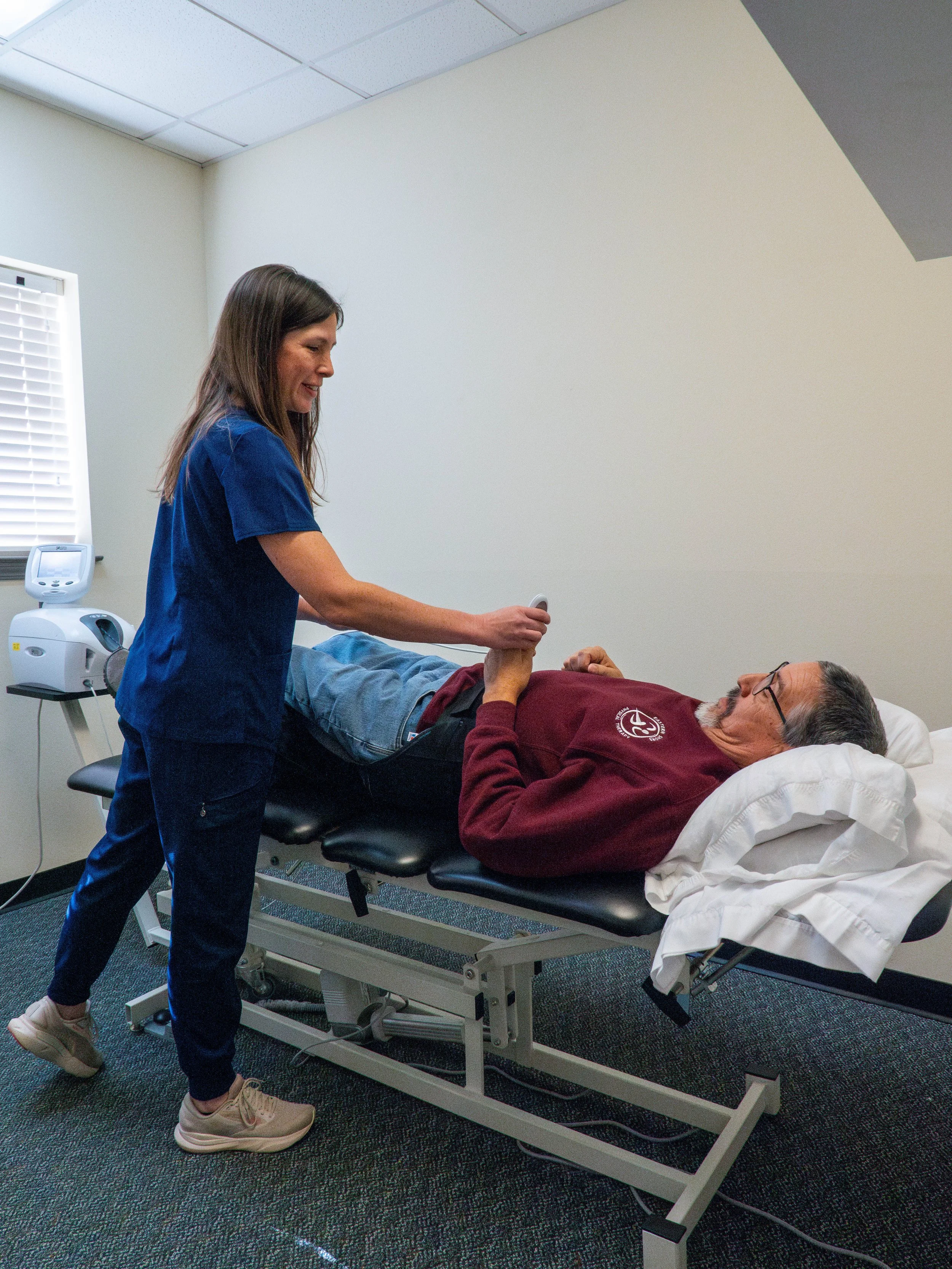
What Traction Is
Traction is a controlled pulling force applied to the neck (cervical traction) or low back (lumbar traction). It can be done:
Manually (your therapist uses hands-on positioning and gentle force), or
Mechanically (a device applies a consistent or intermittent pull)
Cervical traction is commonly described as gently pulling on the head to create space between the bones in the neck
Why We Use It at Eastern Shore PT
Traction can help reduce symptoms in the right patient, and then we build lasting results with strength and movement training.
Short-Term Symptom Relief
Traction may help reduce pain and tension so you can move more comfortably and participate in rehab.
Customized to Your Evaluation
We only recommend traction if your symptoms, exam findings, and response to testing suggest it’s likely to help.
Support for Neck Pain with Radiating Symptoms (When Appropriate)
Research has shown adding mechanical traction to exercise can improve outcomes for some people with cervical radiculopathy (neck-related arm symptoms).
A Tool, Not the Whole Plan
For low back pain, research reviews have found traction often provides little to no benefit for many people, which is why we use it selectively and always pair it with active rehab.
Improve Mobility When Things Feel “Stuck”
Reduced pressure and improved comfort can make it easier to regain motion during treatment sessions.
What to Expect
If traction is a good fit for you, your visit may include:
A quick check of symptoms and comfort level
Positioning to support your spine (neck or low back)
A short traction session (often intermittent/ “on and off”)
Follow-up movement and exercises to reinforce the benefits
Many patients describe traction as a gentle stretch or decompression feeling. If anything feels uncomfortable, we adjust immediately.
Who May Benefit
Traction may be considered for patients who have:
Neck pain with radiating arm symptoms (numbness/ tingling/ pain into the arm)
Symptoms that improve when the spine feels “unloaded” or supported
Stiffness and pressure that limits movement
Certain cases of low back pain with leg symptoms (used selectively and based on response)
Not everyone needs traction. We’ll determine fit during your evaluation.
Safety & Comfort
Traction isn’t appropriate for every condition or every patient. We screen for factors that may make traction unsafe or unhelpful, and we’ll choose other treatment options if traction isn’t the right fit. Cervical traction is a commonly used PT intervention, but it should be applied with proper clinical judgment and patient-specific screening.
Long-Term Recovery
Traction may help reduce symptoms, but long-term improvement comes from what you build next:
Restoring mobility and control
Strengthening the right support muscles
Improving posture and movement mechanics
A home plan you can maintain
Our goal is to help you move better and stay better—not rely on passive treatments alone.
Ready to get started?
Request an appointment today at one of our convenient locations in Daphne or Bay Minette.
DAPHNE CLINIC
6475 Van Buren St.
Daphne, AL 36526
Phone: 251-626-9052
Fax: 251-626-5384
Email: daphne@easternshore-pt.com
Monday: 8am – 5pm
Tuesday: By Appointment Only
Wednesday – Friday: 8am – 5pm
Saturday, Sunday: Closed
BAY MINETTE CLINIC
618 McMeans Ave.
Bay Minette, AL 36507
Phone: 251-937-4700
Fax: 251-937-4708
Email: bayminette@easternshore-pt.com
Monday – Thursday: 8am – 5pm
Friday: By Appointment Only
Saturday, Sunday: Closed
These are wonderful, loving, caring people to be around. It’s never a dull moment with them…
—Alberta Williams
WHAT OUR PATIENTS SAY